

In practice, especially in the banking industry, it is common for organizational and individual clients to do transactions and sign contracts with business branches instead of head office. Clients themself, when transacting with a branch, always consider and implicitly acknowledge that the branch is equal to the enterprise it belongs to. The branch's representative has the legal right to sign on the contract with clients and refer to the branch’s name as the party to such contract. In such cases the enterprise shall bear all liability for contracts signed by the branch or its representative. However, a basic problem that customers often neglect and forget to determine: whether the branch is eligible to sign a contract/perform a transaction or not?
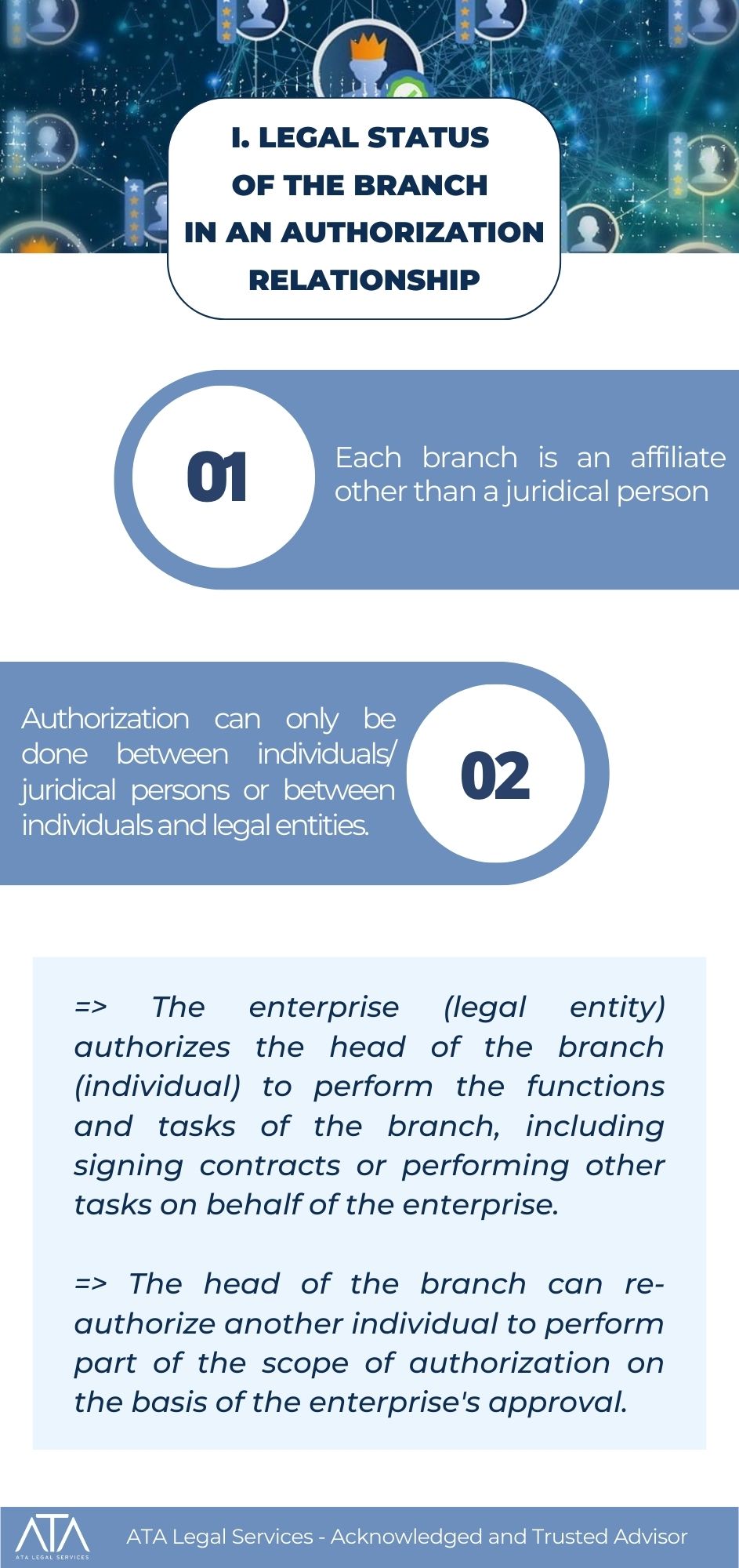
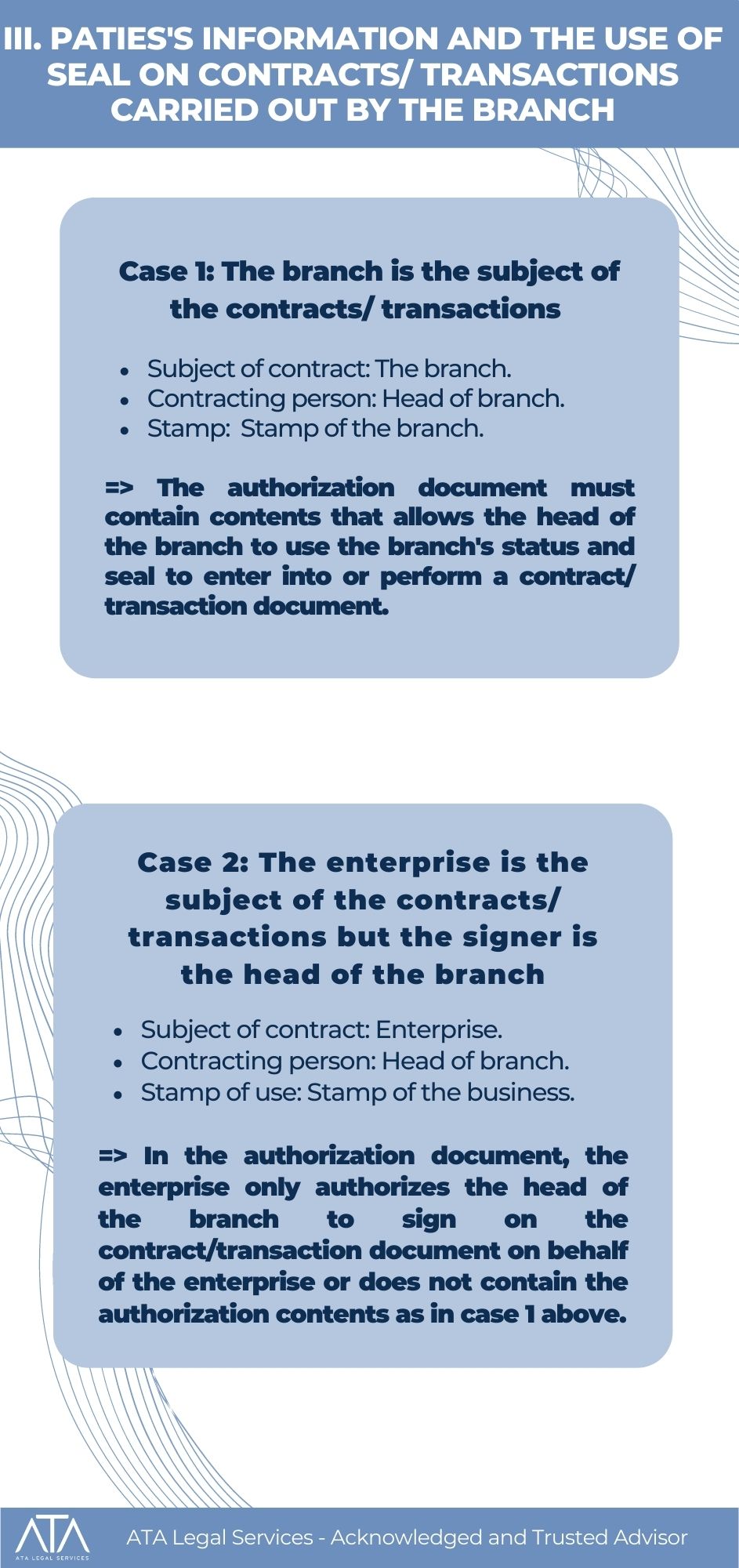
As widely acknowledged, a branch is a dependent unit of a business and has no legal status. Therefore, although the branch is entitled to conduct production and business activities within the registered lines of business, in order to be able to carry out operations, the branch needs an authorization from the enterprise. The authorization can be done by regulations, internal processes promulgated by the enterprise. However, in transactions with commercial partners and clients, the authorization is usually expressed in the authorization document/contract between the enterprise and the branch. Whether the branch is granted the right to transact, sign contracts with customers, partners or not and whether the enterprise is responsible for the contracts/transactions that the branch has signed/performed or not, completely depend on the validity of such authorization document/contract.
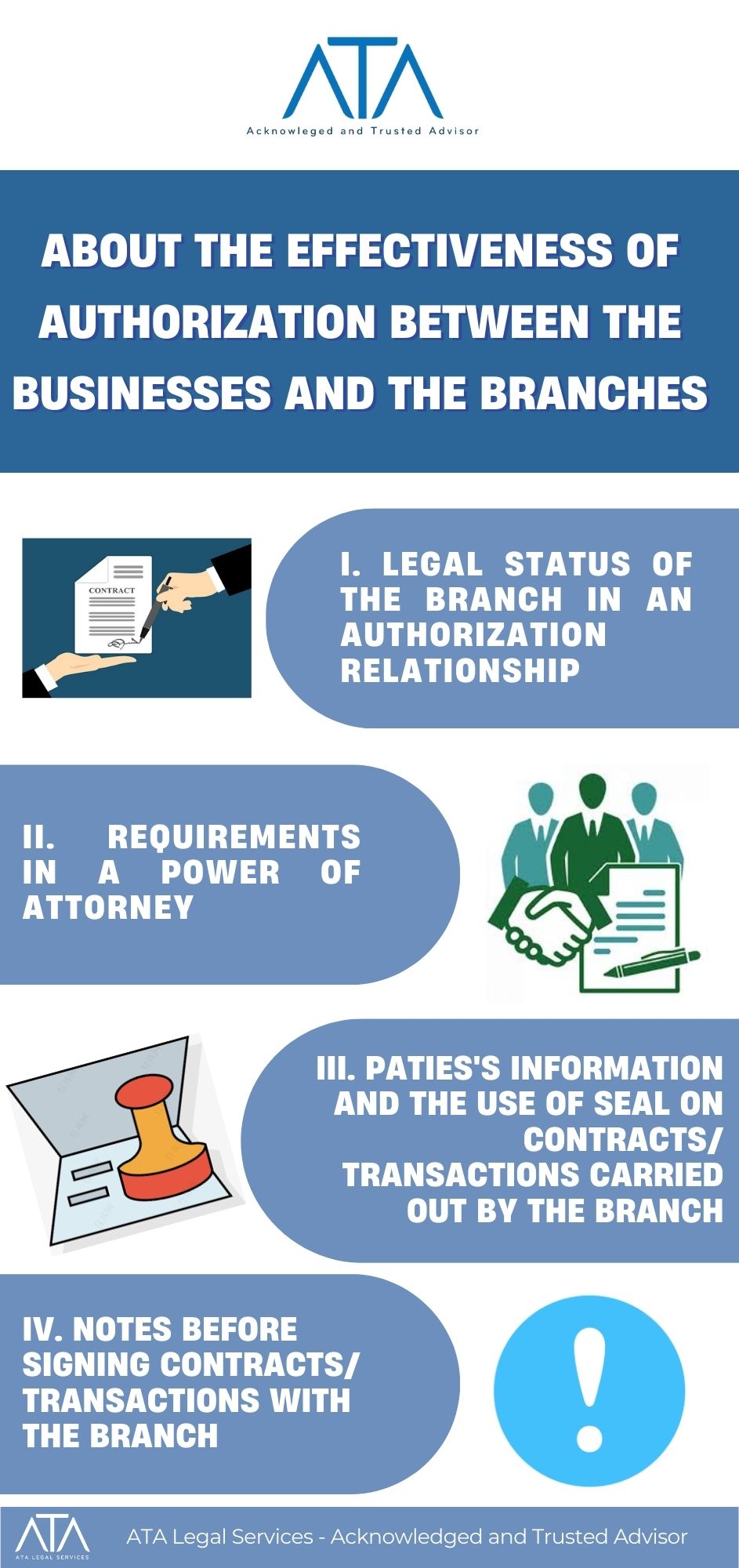
Stemming from the above-mentioned issues, the ATA Legal Services team has developed and researched the topic: "Talking about the effectiveness of authorization between enterprises and branches".
* Regulatory legal documents:
- Civil Code 2015;
- Enterprise Law 2020;
|
No. |
Criteria |
Content |
Legal basis |
|
1 |
Conditions to become a legal entity |
An organization is recognized as a legal entity when it fully meets the following conditions: - Established under the provisions of this Civil Code and other relevant laws; - Having an organizational structure as prescribed in Article 83 of Civil Code; - Having assets independent of other individuals or legal entities and taking responsibility for their own property; - Independently participate in legal relations on their own behalf. |
Clause 1, Article 74 of the Civil Code 2015 |
|
2 |
Legal status of the branch |
A branch is a dependent unit of an enterprise, including an authorized representative function. The branch's line of business must be consistent with the business line of the enterprise. |
Clause 1 Article 44 LDN 2020 |
|
A branch is a dependent unit of a legal entity, not a legal entity. The branch is responsible for performing all or part of the functions of the legal entity. |
Article 84 of the Civil Code 2015 |
||
|
3 |
Authorized representative |
Individuals and legal entities may authorize other individuals or legal entities to establish and perform civil transactions. |
Clause 1, Article 138 of the 2015 Civil Code |
|
4 |
Branch Head |
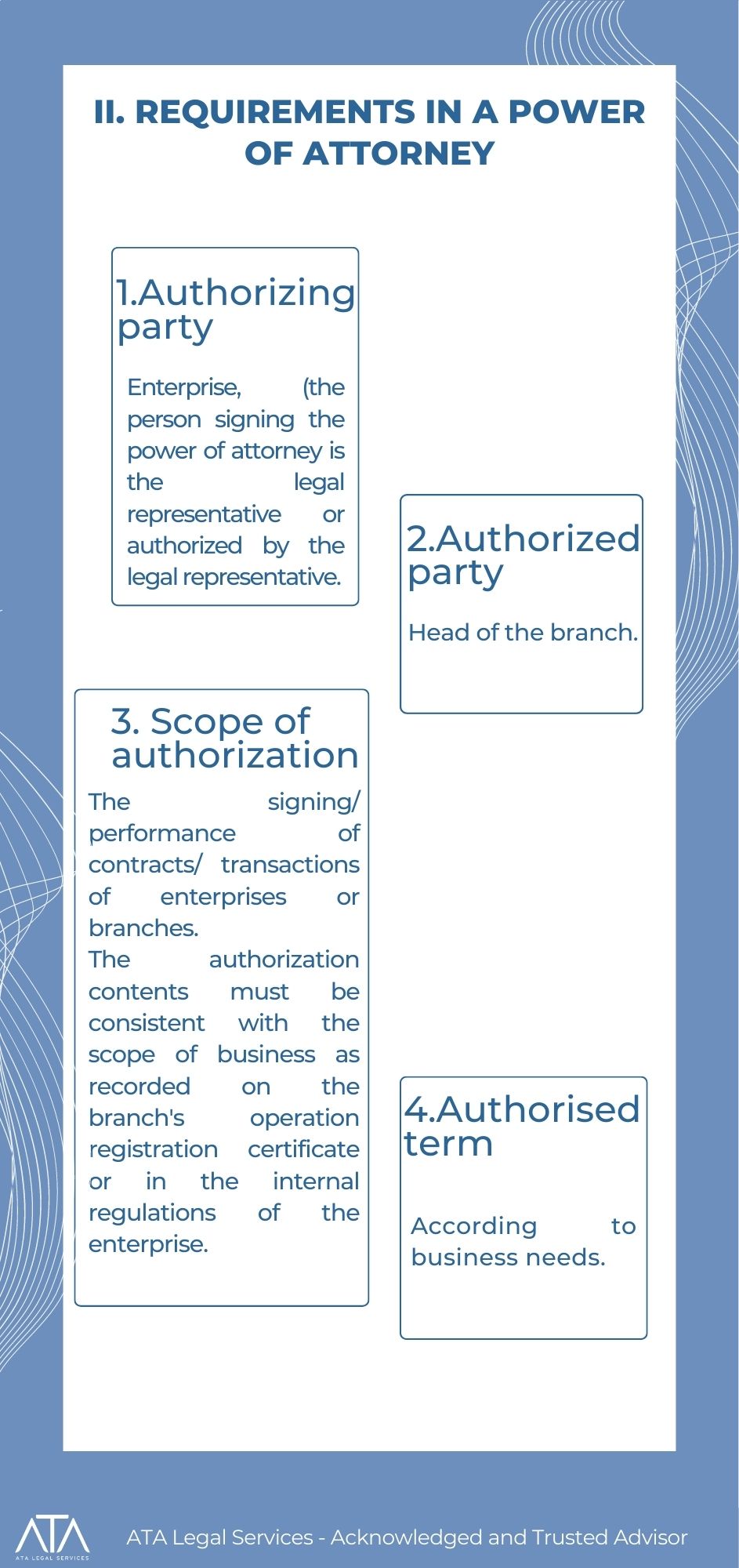
The head of the branch or representative office shall perform the tasks authorized by the legal entity within the scope and duration of the authorization. |
Clause 5, Article 84 of the Civil Code 2015 |
|
5 |
The basis for determining the scope of representation |
The representative may only establish and perform civil transactions within the scope of representation on the following grounds: - Decision of the competent authority; - The legal charter of the legal entity; - Authorised subject; - Other provisions of law. |
Clause 1, Article 141 of the Civil Code 2015 |




Comment: